

The Treasure Hunt for Missing Funds
Imagine the panic that ensues when you lose your wallet, containing your hard-earned cash and identification. Now, imagine the same scenario for a multinational enterprise, with millions of dollars at stake. Financial reconciliation is the equivalent of a corporate wallet check, ensuring that each penny is accounted for. In simpler terms, it’s an accounting process by which two different data sets are meticulously compared to verify that the information within them is accurate and consistent. This seemingly mundane task is crucial for financial stability, yet its significance is often underestimated.
The neglect of financial reconciliation can have significant repercussion across all levels of business. Even the largest corporations, seemingly impervious to risk, can be brought to their knees by a simple oversight in financial reconciliation. A recent example of this is the collapse of Silicon Valley Bank (SVB): While the specific circumstances of SVB’s failure are complex, a key contributing factor was a mismatch between its short-term liabilities and long-term assets1. This mismatch, which arose due to a failure in financial reconciliation, led to significant unrealized losses, including a pre-payment penalty of $285 million and ultimately, a bank run2. The repercussions extend far beyond finances, it can lead to reputational damage, operational disruption and strategic stagnation. Effectively, financial reconciliation is not merely a compliance requirement; it is a strategic imperative.
Why Reconcile?
In a recent survey, 50% of financial decision-makers at large companies said that their payments are accurately reconciled less than 80% of the time3. An efficient financial reconciliation setup becomes crucial in such cases to improve financial accuracy, mitigate risks, and maintain compliance with regulatory standards.
Exhibit 1. Benefits of Financial Reconciliation
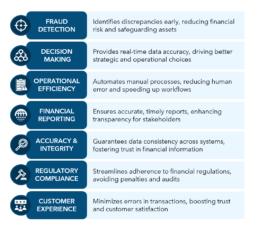
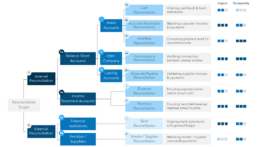
Exhibit 2. Types of Reconciliation
Mastering Each Stage of the Reconciliation Process: Best Practices
Exhibit 3. Stages of a Robust Financial Reconciliation Framework

STAGE 1: STRATEGIC ALIGNMENT AND RISK ASSESSMENT
1.1 Standard Operating Procedures (SOPs): Documented, step-by-step guidelines and instructions help provide structure, stability and direction to reconciliation processes. This also increases efficiency, reduces risk/ errors, and makes it easy to onboard new team members for reconciliation.
1.2 Cross-Functional Collaboration: Ensure reconciliation processes are understood and supported across departments (Finance, IT, Operations, etc.) by creating cross-functional teams and organizing events like workshops to encourage peer learning on reconciliation
1.3 Risk Assessment and Mitigation: Conduct a comprehensive risk assessment to identify potential vulnerabilities and implement effective mitigation strategies.
1.4 Training and Development: Implement targeted training programs to improve the financial acumen and analytical skills of staff involved. Encourage them to pursue relevant certifications to build expertise. Businesses often have 4+ FTEs for financial reconciliation and 36% of companies lose 1 full workday/week on payment operations4.
STAGE 2: DATA EXTRACTION, IMPORT AND CLEANSING
2.1 Data Standardization and Quality Monitoring: Ensure data accuracy, consistency, and completeness through rigorous cleansing and standardization processes. Establishing a robust data lineage can help track data origin, movement and transformations
STAGE 3: RECONCILIATION PROCESS
3.1 Continuous Monitoring: Implement real-time monitoring systems to track reconciliation progress and identify potential anomalies
3.2 Intelligent Automation: Leverage advanced technologies such as AI, ML and RPA to automate routine tasks as manual reconciliation processes can consume up to 20%1 of a financial institution’s operational budget, diverting resources from strategic endeavors
3.3 Predictive Analytics: Utilizing predictive analytics can enhance the reconciliation process by forecasting potential discrepancies before they occur. This proactive approach leverages historical data and trends to identify patterns that may indicate future issues, allowing teams to address them preemptively.
STAGE 4: EXCEPTION MANAGEMENT
4.1 Exception-Based Analysis: Prioritize exceptions based on their potential impact and severity, enabling timely investigation and resolution
4.2 Root Cause Analysis: Conduct in-depth investigations to identify the underlying causes of discrepancies and implement corrective measures to prevent recurrence
4.3 Automated Alerts: Configure automated alerts or a early warning system to notify relevant stakeholders of critical exceptions or deviations from established thresholds
STAGE 5: DOCUMENTATION, COMPLIANCE & REPORTING
5.1 Comprehensive Documentation: Maintain a detailed audit trail, including transaction records, reconciliation reports, and supporting documentation
5.2 Compliance Adherence: Ensure compliance with relevant accounting standards, regulatory requirements, and internal policies
STAGE 6: AUDIT TRAIL AND CONTINUOUS IMPROVEMENT
6.1 Internal Controls: A good internal control system helps mitigate risks in an organization’s financial reporting. They will promote confidence and accuracy of information in financial statements, because of thorough and correct reconciliation.
6.2 Regular Audits: Examination of financial statements by an internal audit team provides assurance that they are accurate, complete and in compliance with all regulations. This ensures that current reconciliation processes are effective and reliable.
6.3 Benchmarking and Best Practices: Compare performance against industry benchmarks and adopt best practices to enhance efficiency and effectiveness
6.4 Technology Adoption: Stay updated with emerging technologies and explore opportunities to leverage them for further process innovation. In the next three years, 66%6 of FIs plan to heavily invest in new solutions automating manual processes, as a top-3 priority.
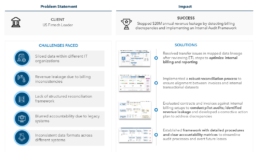
Exhibit 4. Framework In Action: Revenue Leakage Reduction for a Fintech Client
Evolving Complexities
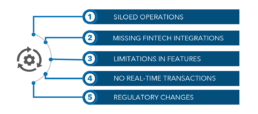
- Resolving Legacy Systems Limitations (Exhibit 5)Many organizations may find themselves spending excessive resources on outdated legacy systems that are not integrated with modern financial technologies. The siloed data across different platforms and the lack of interoperability requires finance teams to manually compile and compare data from various sources, which not only increases the risk of errors but also prolongs the reconciliation timeline.
- Navigating the world of APIsEach new data source often comes with its own API, leading to a fragmented landscape where integrating multiple APIs becomes complex and cumbersome. This can result in inconsistent data formats and standards, complicating the reconciliation of transactions across different systems and increasing the potential for errors.
- Evolving Regulatory ComplianceAs financial landscape evolves, the regulatory requirements keep changing frequently. Failing to adapt to new regulations can result in penalties and reputational damage. JPMorgan Chase was fined $125 million by the SEC7 for failing to maintain and preserve written communications, highlighting significant recordkeeping deficiencies. Additionally, the bank faced $348 million in fines for inadequate trade surveillance, underscoring the critical need for effective monitoring.
Exhibit 5.Top 5 Challenges associated with Legacy Systems
Navigating the Future: Trends
- Specialized RolesThe demand for reconciliation experts is growing as organizations need skilled professionals to handle large volumes of transactions, complex financial instruments and strict compliance requirements.
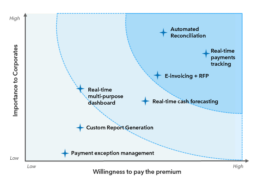
- Automated Reconciliation ToolsOrganizations are moving away from manual reconciliation processes, which are often time-consuming and prone to human error, towards automated tools that simplify and accelerate the process by up to 100×8. Instant solutions are in high demand to address value chain complexities and automated reconciliation is ranked as a top priority, with firms willing to pay premiums for best-in-class solutions (Exhibit 6).
Exhibit 6. Corporate Priorities: Weighing willingness to pay against use case significance
Imagine the panic that ensues when you lose your wallet, containing your hard-earned cash and identification. Now, imagine the same scenario for a multinational enterprise, with millions of dollars at stake. Financial reconciliation is the equivalent of a corporate wallet check, ensuring that each penny is accounted for. In simpler terms, it’s an accounting process by which two different data sets are meticulously compared to verify that the information within them is accurate and consistent. This seemingly mundane task is crucial for financial stability, yet its significance is often underestimated.
- Real-Time ReconciliationReal-time reconciliation provides organizations with immediate financial insights, continuous transaction monitoring and improved cash flow management and reporting, increasing the likelihood of achieving financial targets by 20%.
- API IntegrationImplementing APIs in financial reconciliation streamlines the process and enhances accuracy through real-time data sync, error reduction, scalability, and customization. APIs are revolutionizing the finance sector, with adoption in banking projected to grow at a 24.7% CAGR over the next decade.
- Monitoring DashboardsDashboards act as a central hub for financial data, offering visual representation of key metrics and reconciliation statuses. They enable real-time tracking of activities and discrepancies, allowing finance teams to promptly address issues and make informed decisions.
- Item-level reconciliationA significant shift from traditional batch reconciliation methods to item-level reconciliation has been observed. As payments become more real-time and complex, companies are driving itemized reconciliation either internally or through third-party service providers, like Modern Treasury’s AI-assisted item-level reconciliation rates of 90-100%.
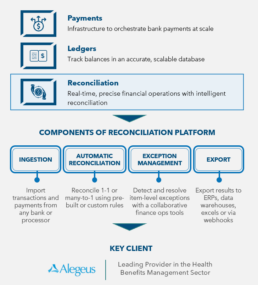
Modern Treasury: Intelligent Reconciliation
Modern Treasury offers tools that automate the full cycle of money movement—from payment initiation to approvals and reconciliation—and are accessible through web application or API. Their solutions are being utilized across several industries, including real estate, healthcare, education, and financial services13.
Modern Treasury’s Reconciliation tools enable organizations to manage their financial operations more effectively, ensuring accuracy, compliance, and faster reporting throughout the reconciliation process.
- Automates complex reconciliation tasks
- Integrates disparate data sources to match transactions automatically for faster reconciliation
- Incorporates AI capabilities that generate rule suggestions and improve match rates based on existing data patterns
- Offers AI-powered flexible data ingestion to allow finance teams to import data in user-defined formats
- Features real-time dashboards that provide visibility into the reconciliation process and item-level granularity
- Resolves error by utilizing AI to suggest solutions for exceptions
- Provides enterprise-grade scale, controls & security
Exhibit 7. Products Offered by Modern Treasury
Upgrade to Financial Reconciliation 2.0
Financial reconciliation has always been a cornerstone of sound financial management, ensuring accuracy, accountability, and trust in business operations. However, today’s financial landscape presents unprecedented challenges with increasing transaction volumes, real-time settlements, and a broader mix of financial instruments. Relying on manual, fragmented processes is no longer viable—organizations must pivot toward advanced solutions that drive efficiency and mitigate risks.
The journey to achieving robust financial reconciliation will involve navigating significant challenges—such as adopting new technologies and reshaping established procedures. The pivotal first step is the integration of real-time, granular data from disparate sources—like general ledgers, banks, and third-party service providers—into a centralized data platform. This integration enables the deployment of analytical tools and dynamic dashboards that facilitate ongoing monitoring and actionable insights.
The evolution toward Reconciliation 2.0 represents not just operational improvement but a strategic move to secure the bottom line and unlock new opportunities for growth. By implementing the best practices laid out in this paper and harnessing the power of data and technology, organizations can future-proof their reconciliation processes, transitioning from merely detecting discrepancies to proactively preventing them.